

Tokyo, Japan – March 24, 2026 – BEENOS Inc. announced the results of a survey on how recent tax reforms and customs-rule changes are affecting overseas consumers’ use of cross-border e-commerce. Cross-border e-commerce is undergoing major change, including the 2025 abolition of the de minimis rule in the U.S. and the introduction of new customs rules in 2026.This survey aimed to clarify how these changes affect consumer behavior among users in countries that have implemented tax reforms since 2020.
Executive Summary
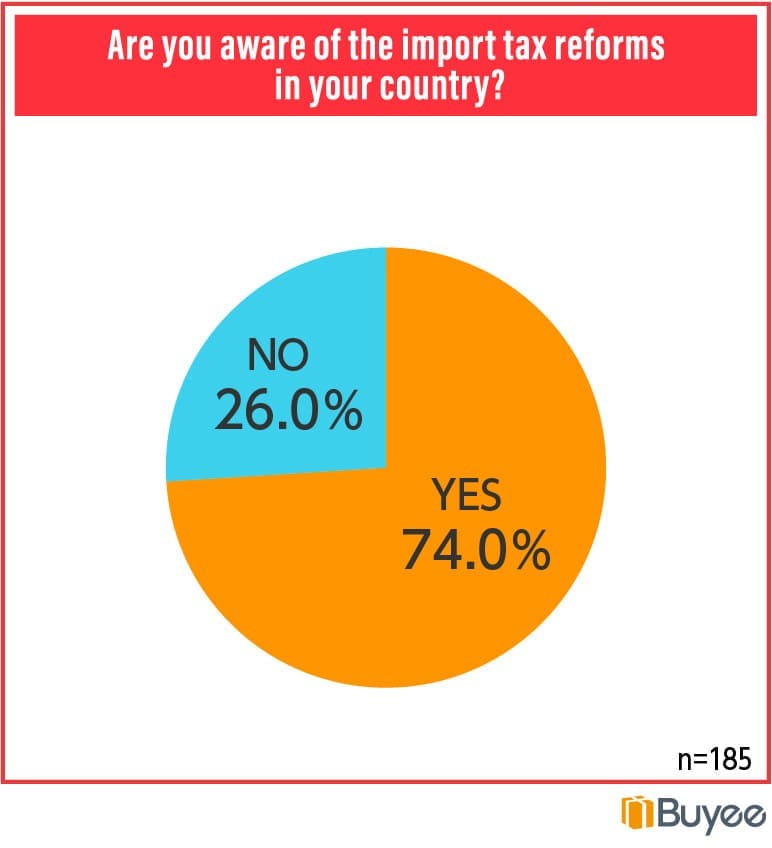
• High Awareness: 74.0% of respondents are aware of tax reforms in their own countries.
• Tax Thresholds: 83.5% consider a customs duty rate of up to 15% to be within their acceptable range.
• Value-Oriented Behavior: Sensitivity to coupons and promotions increased following tax rule changes.
• Resilient Spending: While purchase frequency remained stable compared with 2024, the share of purchases over 10,000 JPY rose by 10.7 points.
• Preferred Payment Method: Respondents showed a strong preference for DDP (Delivered Duty Paid) over DDU (Delivered Duty Unpaid) to avoid unexpected costs and customs-related hassle.
• Key Drivers: Anime goods and Japan-exclusive items remain powerful motivators that outweigh concerns about customs duties.
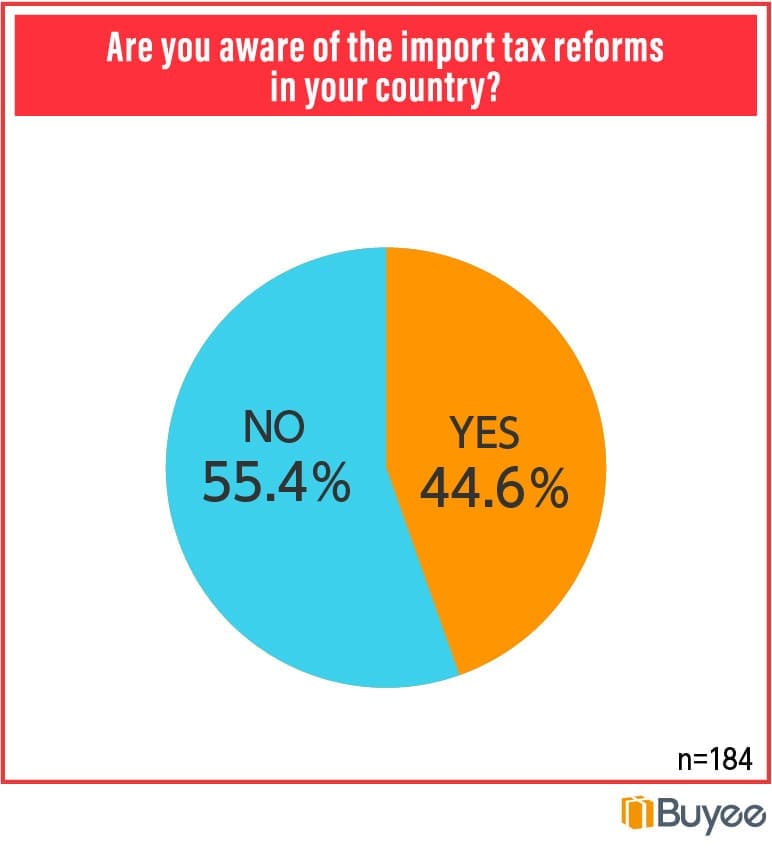
While a majority are aware of tax reforms, only 44.6% said they consciously check whether specific items are subject to duties when using cross-border e-commerce, suggesting that fewer than half directly connect this knowledge to their purchasing behavior.
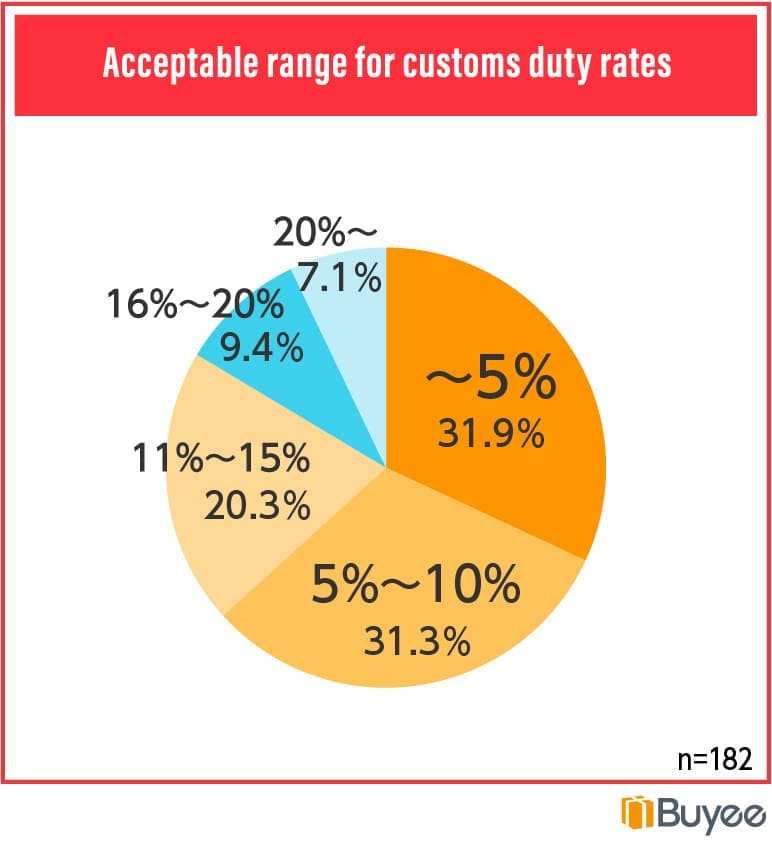
Responses indicating that an acceptable customs duty rate is "up to 15%" accounted for 83.5% of the total.
This may reflect the 15% reciprocal tariff rate introduced by the U.S. in 2025 for major allies including Japan, the EU, and South Korea.
Notably, 16.5% of respondents indicated an acceptable range of "16% or higher," reflecting a strong willingness to continue using Japanese cross-border e-commerce even as customs costs rise.
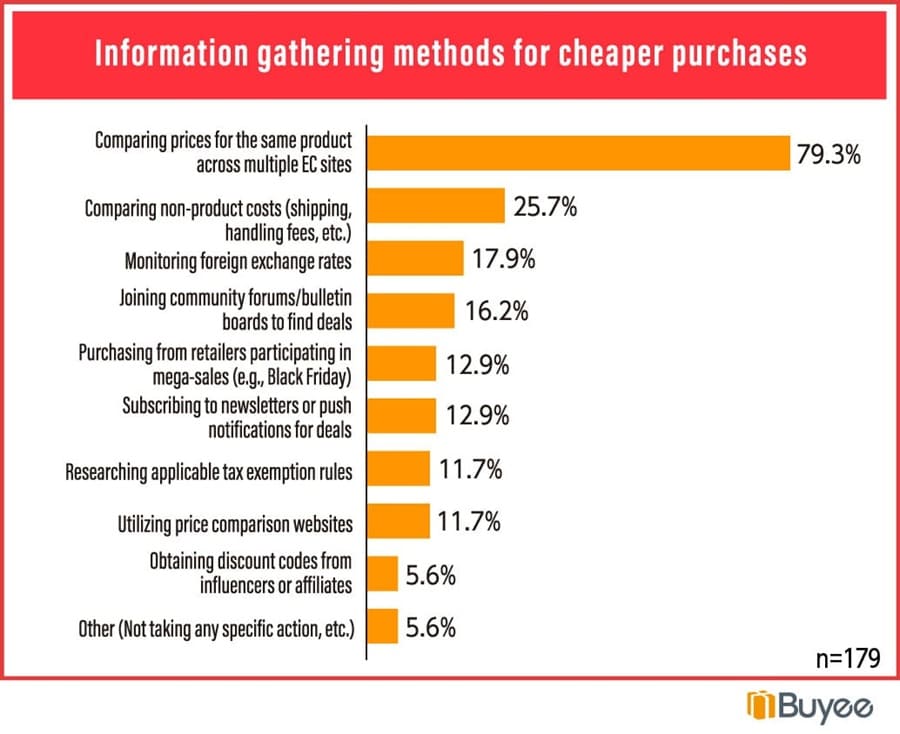
In terms of how consumers gather information to buy products at lower prices, "comparing prices for a single product across multiple e-commerce sites" stood out at 79.3%. This suggests that even within cross-border e-commerce, consumers are actively comparing options to find the best deals.
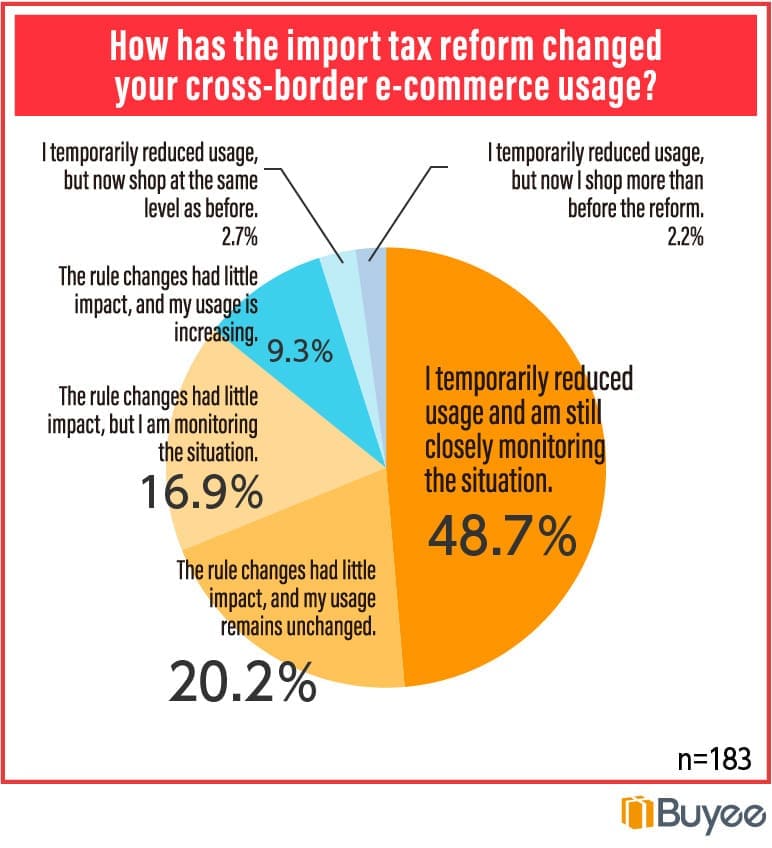
Regarding changes in cross-border e-commerce usage, the most common response was "temporarily reduced usage and currently monitoring the situation," at 48.7%. This may have been influenced by the fact that the survey was conducted during a period of legal proceedings concerning the legitimacy of reciprocal tariffs.
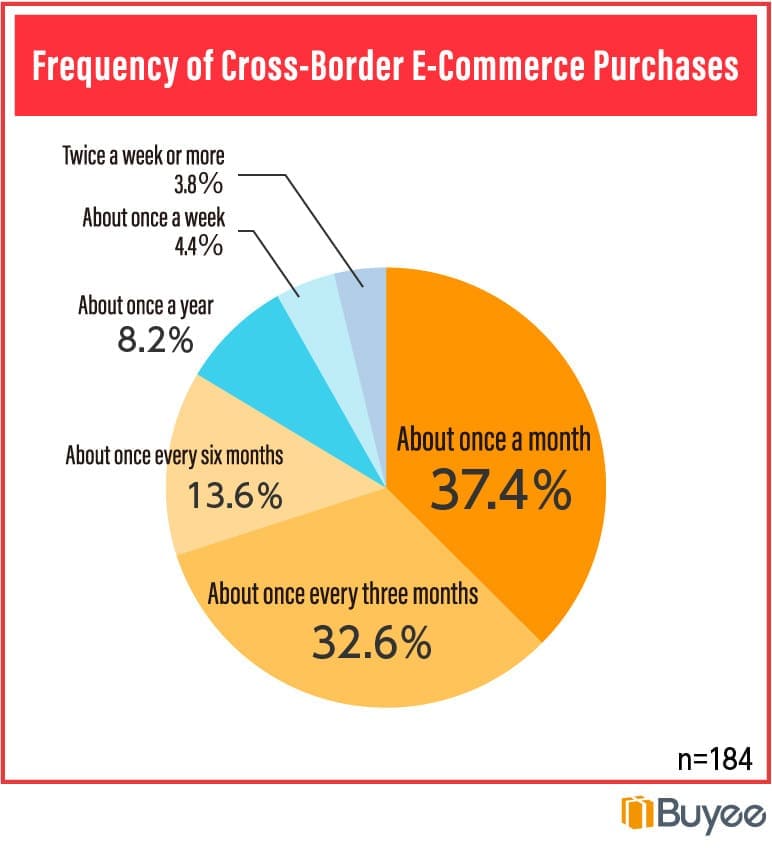
While 53.1% of respondents are residents of the United States, this figure shows almost no change from the 46.2% recorded when the same question was asked in November 2024.
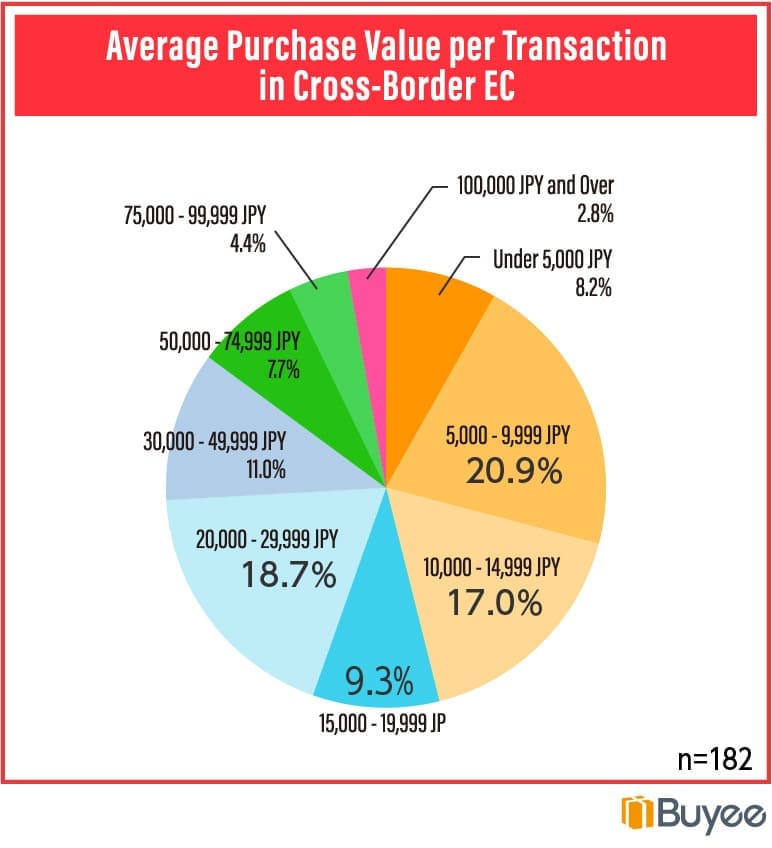
A similar comparison of purchase value per transaction shows that the share of purchases totaling "10,000 JPY or more"—which stood at 60.2% in November 2024—rose to 70.9%, an increase of 10.7 points. Although the survey populations differ somewhat between the previous and current studies, the results suggest that purchase frequency has remained largely stable while average transaction value is trending upward. This aligns with the 2025 cross-border e-commerce consumption keyword "Oshikatsu Collector Consumption," reflecting increased purchases driven by collecting demand and stronger hobby-related interest.
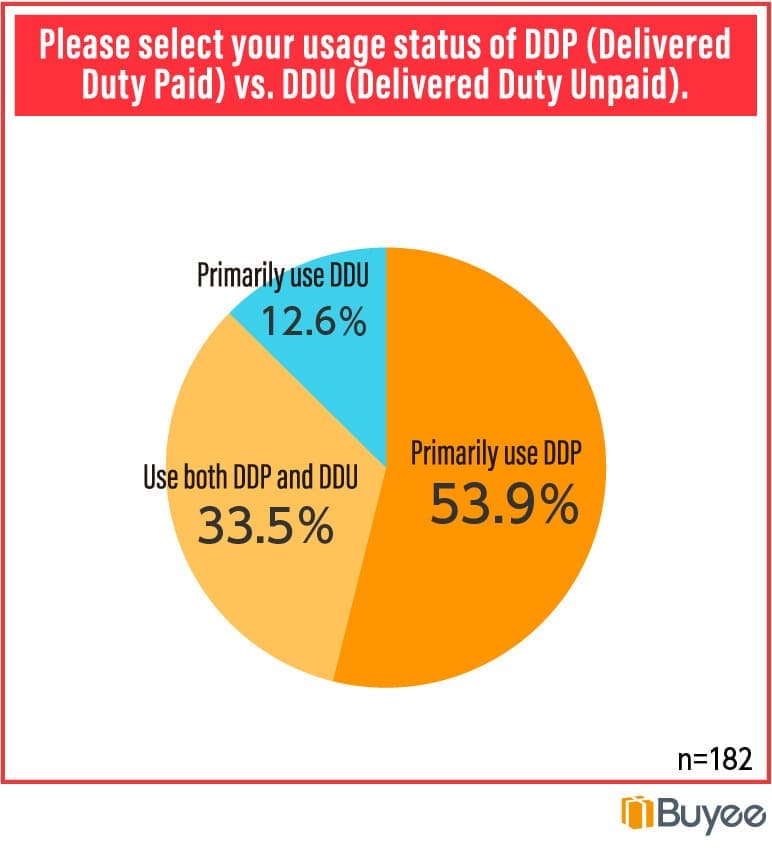
When asked about current usage, more than half of respondents (53.9%) said they use DDP, while 33.5% said they use both DDP and DDU. Only 12.6% said they primarily use DDU, highlighting the strong preference for DDP among overseas consumers.
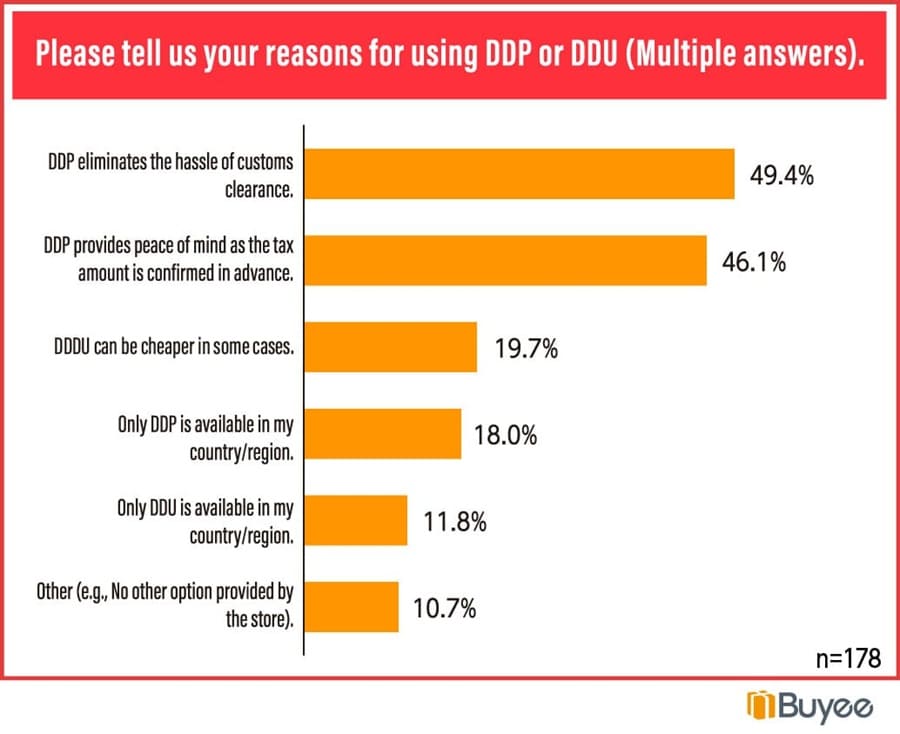
The main reasons cited for choosing DDP were "fewer customs-related hassles" (49.4%) and "greater peace of mind because duties are known in advance" (46.1%).
While "the possibility of lower costs" (19.7%) was cited as a reason for using DDU, this method does not allow customers to confirm customs duties or handling fees in advance. Because there is a risk that costs will be higher than expected, DDP is favored for the reassurance it provides by fixing the duty amount before the package arrives.
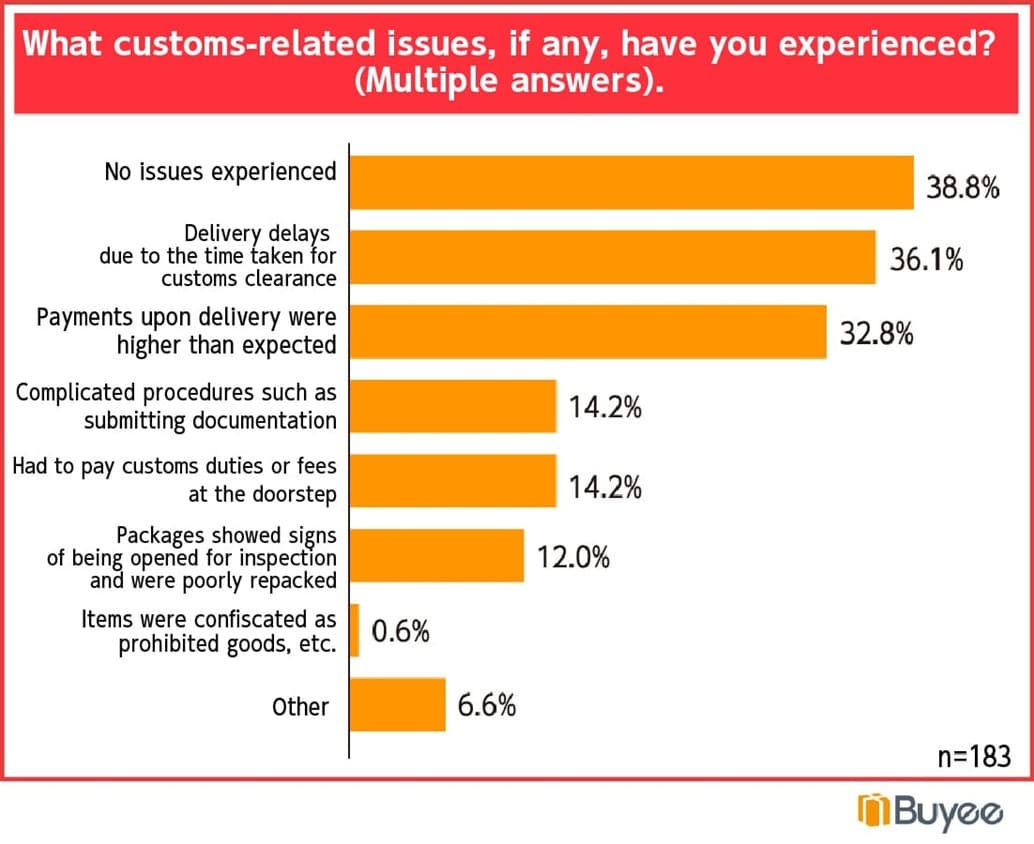
Among those who had experienced problems, the top responses were "delivery delays" at 36.1% and "unexpected charges at delivery" at 32.8%, both of which are issues unique to cross-border e-commerce. In addition, while conditions vary by country and product value, certain categories such as toys, games, and books may be eligible for tax exemptions in some cases.
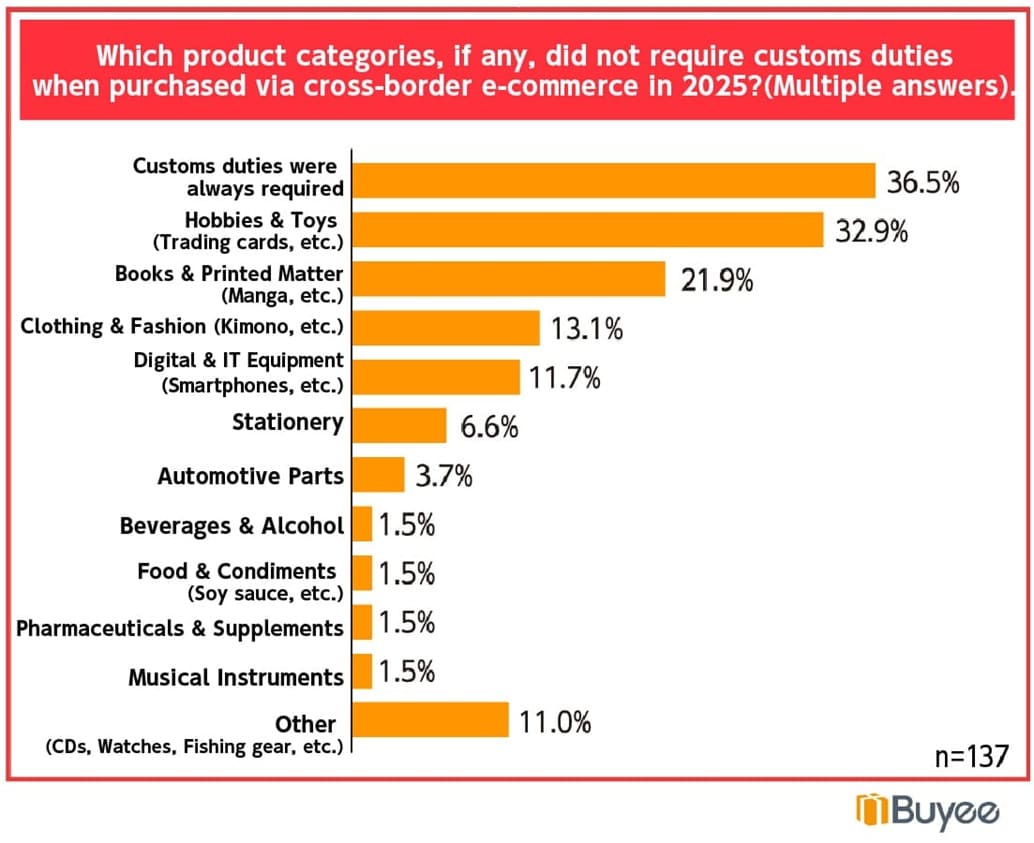
When asked about product categories for which no customs duty was paid, "duties were always required" was the most common response, at 36.5%. However, "Hobbies & Toys" at 32.9% and "Books & Printed Matter" at 21.9% also ranked highly. This suggests that these categories may currently be less affected by recent tax rule changes.
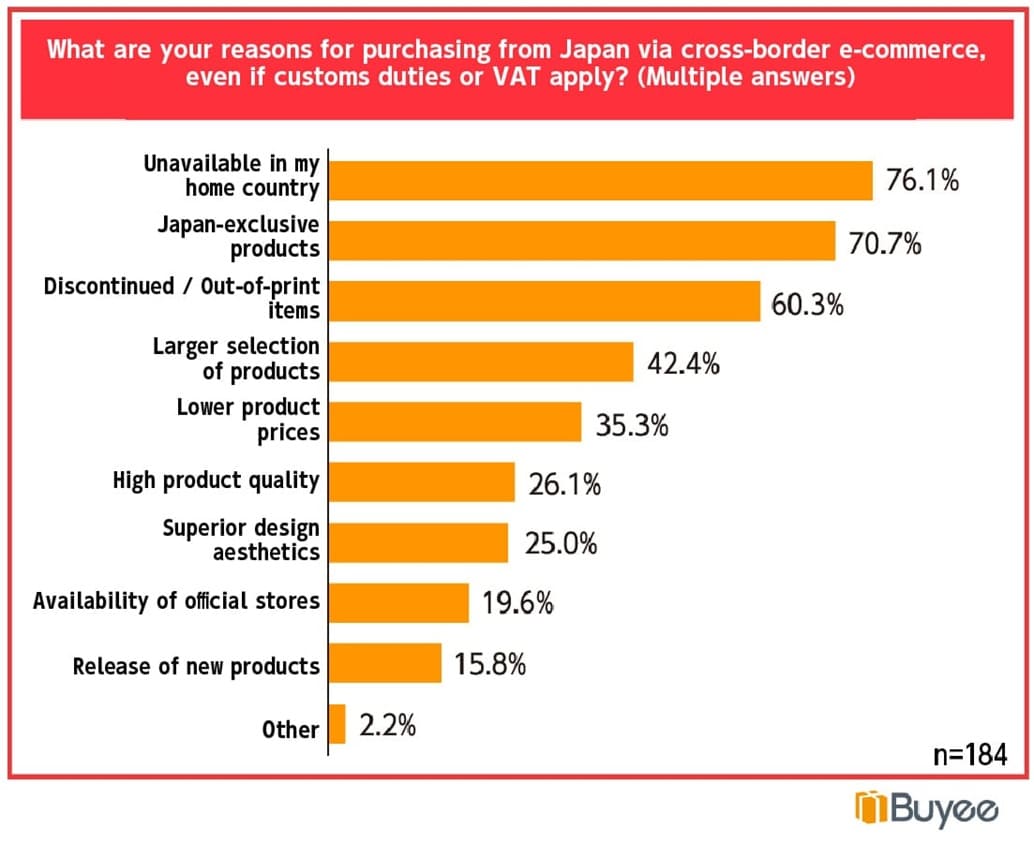
The main reasons for this willingness were "Unavailable in my home country" at 76.1%, "Japan-exclusive products" at 70.7%, and "Discontinued/Out-of-print items" at 60.3%.
If these items were available locally, there would theoretically be less need to use cross-border e-commerce. However, overseas consumers who become fans through video streaming platforms and other media are increasingly turning to Japan—with its wide product selection—for their purchases.
Survey Overview
• Survey Period: January 14–21, 2026
• Number of Respondents: 185
• Target Respondents: Customers who purchased products through Buyee within one year prior to the survey start date and whose display language is set to "English."
• Target Countries/Regions: United States, EU, United Kingdom, Singapore, Brazil, Turkey, Thailand, and Vietnam (countries/regions where customs duties or VAT exemptions have been abolished or reduced since 2020)
• Survey Method: Online questionnaire
• Conducted by: BEENOS Group
Note 1: "Awareness Survey on Cross-Border EC Usage Intentions: A Study of 1,345 International Customers"
https://beenos.com/news-center/press-release/20250106_bns_pr/
Note 2: "BEENOS Announces ' Cross-Border E-Commerce x Hit Rankings 2025'"
https://beenos.com/news-center/press-release/20260227_bns_pr/
Note 3: "Buyee FAQ: About Customs Duties"
https://faq.buyee.jp/faq_list?lang=en?mrc1=listing&category_id=9
Executive Summary
• High Awareness: 74.0% of respondents are aware of tax reforms in their own countries.
• Tax Thresholds: 83.5% consider a customs duty rate of up to 15% to be within their acceptable range.
• Value-Oriented Behavior: Sensitivity to coupons and promotions increased following tax rule changes.
• Resilient Spending: While purchase frequency remained stable compared with 2024, the share of purchases over 10,000 JPY rose by 10.7 points.
• Preferred Payment Method: Respondents showed a strong preference for DDP (Delivered Duty Paid) over DDU (Delivered Duty Unpaid) to avoid unexpected costs and customs-related hassle.
• Key Drivers: Anime goods and Japan-exclusive items remain powerful motivators that outweigh concerns about customs duties.
74.0% of Respondents Aware of Domestic Tax Reforms; 83.5% Accept Customs Duty Rates of Up to 15%
When asked whether they were aware of tax reforms in their own country, 74.0% of respondents said they were.While a majority are aware of tax reforms, only 44.6% said they consciously check whether specific items are subject to duties when using cross-border e-commerce, suggesting that fewer than half directly connect this knowledge to their purchasing behavior.
Responses indicating that an acceptable customs duty rate is "up to 15%" accounted for 83.5% of the total.
This may reflect the 15% reciprocal tariff rate introduced by the U.S. in 2025 for major allies including Japan, the EU, and South Korea.
Notably, 16.5% of respondents indicated an acceptable range of "16% or higher," reflecting a strong willingness to continue using Japanese cross-border e-commerce even as customs costs rise.
Greater Focus on Value-Driven Purchases Through Coupons and Promotions
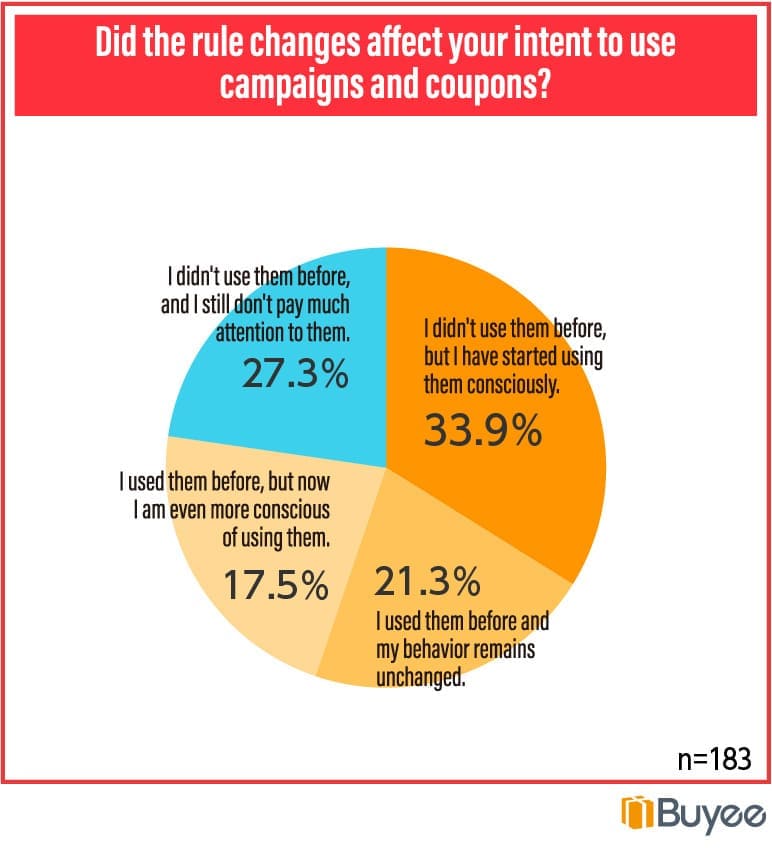
The combined percentage of respondents who said tax reforms led them to "pay more attention to coupons and promotions" exceeded half, at 51.4%. This indicates a growing focus on getting better value when making purchases.In terms of how consumers gather information to buy products at lower prices, "comparing prices for a single product across multiple e-commerce sites" stood out at 79.3%. This suggests that even within cross-border e-commerce, consumers are actively comparing options to find the best deals.
Regarding changes in cross-border e-commerce usage, the most common response was "temporarily reduced usage and currently monitoring the situation," at 48.7%. This may have been influenced by the fact that the survey was conducted during a period of legal proceedings concerning the legitimacy of reciprocal tariffs.
Usage Frequency of "At Least Once a Month" Remains Steady Compared with 2024; Share of Purchases over 10,000 JPY Rises by 10.7 Points
The percentage of respondents using cross-border e-commerce "at least once a month" was 45.2%.While 53.1% of respondents are residents of the United States, this figure shows almost no change from the 46.2% recorded when the same question was asked in November 2024.
A similar comparison of purchase value per transaction shows that the share of purchases totaling "10,000 JPY or more"—which stood at 60.2% in November 2024—rose to 70.9%, an increase of 10.7 points. Although the survey populations differ somewhat between the previous and current studies, the results suggest that purchase frequency has remained largely stable while average transaction value is trending upward. This aligns with the 2025 cross-border e-commerce consumption keyword "Oshikatsu Collector Consumption," reflecting increased purchases driven by collecting demand and stronger hobby-related interest.
Stronger Preference for DDP over DDU for Convenience and Peace of Mind
Customs payment methods are broadly divided into DDP (Delivered Duty Paid, payment at the time of purchase) and DDU (Delivered Duty Unpaid, payment upon delivery).When asked about current usage, more than half of respondents (53.9%) said they use DDP, while 33.5% said they use both DDP and DDU. Only 12.6% said they primarily use DDU, highlighting the strong preference for DDP among overseas consumers.
The main reasons cited for choosing DDP were "fewer customs-related hassles" (49.4%) and "greater peace of mind because duties are known in advance" (46.1%).
While "the possibility of lower costs" (19.7%) was cited as a reason for using DDU, this method does not allow customers to confirm customs duties or handling fees in advance. Because there is a risk that costs will be higher than expected, DDP is favored for the reassurance it provides by fixing the duty amount before the package arrives.
Approximately 40% Report No Customs Issues; "Delivery Delays" and "Unexpected Charges at Delivery" Stand Out Among Those with Experience
When asked about customs-related issues, "No issues experienced" was the most common response, at 38.8%.Among those who had experienced problems, the top responses were "delivery delays" at 36.1% and "unexpected charges at delivery" at 32.8%, both of which are issues unique to cross-border e-commerce. In addition, while conditions vary by country and product value, certain categories such as toys, games, and books may be eligible for tax exemptions in some cases.
When asked about product categories for which no customs duty was paid, "duties were always required" was the most common response, at 36.5%. However, "Hobbies & Toys" at 32.9% and "Books & Printed Matter" at 21.9% also ranked highly. This suggests that these categories may currently be less affected by recent tax rule changes.
Anime Goods, Limited Editions, and Other Japan-Exclusive Products Remain Strong Motivators for Purchasing Despite Customs Duties
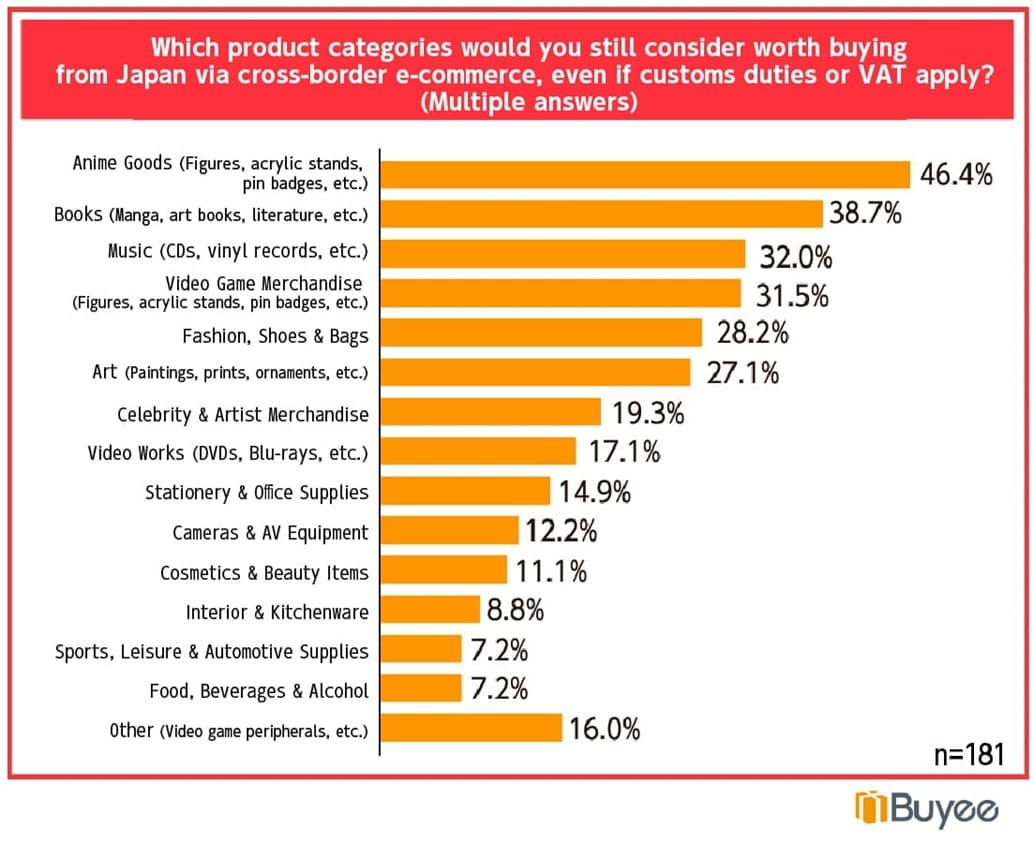
Content-related categories topped the list of products that consumers are willing to purchase even if they must pay customs duties or VAT, with "Anime Goods" at 46.4%, "Books" at 38.7%, and "Music" at 32.0%.The main reasons for this willingness were "Unavailable in my home country" at 76.1%, "Japan-exclusive products" at 70.7%, and "Discontinued/Out-of-print items" at 60.3%.
If these items were available locally, there would theoretically be less need to use cross-border e-commerce. However, overseas consumers who become fans through video streaming platforms and other media are increasingly turning to Japan—with its wide product selection—for their purchases.
Survey Overview
• Survey Period: January 14–21, 2026
• Number of Respondents: 185
• Target Respondents: Customers who purchased products through Buyee within one year prior to the survey start date and whose display language is set to "English."
• Target Countries/Regions: United States, EU, United Kingdom, Singapore, Brazil, Turkey, Thailand, and Vietnam (countries/regions where customs duties or VAT exemptions have been abolished or reduced since 2020)
• Survey Method: Online questionnaire
• Conducted by: BEENOS Group
Note 1: "Awareness Survey on Cross-Border EC Usage Intentions: A Study of 1,345 International Customers"
https://beenos.com/news-center/press-release/20250106_bns_pr/
Note 2: "BEENOS Announces ' Cross-Border E-Commerce x Hit Rankings 2025'"
https://beenos.com/news-center/press-release/20260227_bns_pr/
Note 3: "Buyee FAQ: About Customs Duties"
https://faq.buyee.jp/faq_list?lang=en?mrc1=listing&category_id=9
- Related Links
-
Contact Information Regarding this Release
BEENOS Inc. Public Relations